


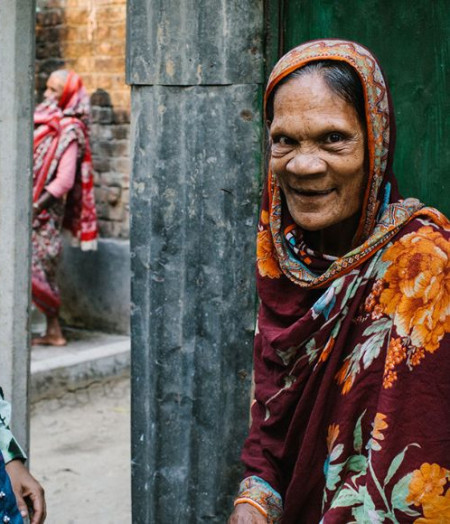
The following real-life story mentions domestic abuse.
“I developed blisters and numbness on my hands and feet, but it wasn’t until around five years later that I was officially diagnosed.”
At the time, Komola was 24 years old and living with her husband. But alongside the physical effects of the disease, she endured domestic abuse. When she was diagnosed with leprosy, her husband's abuse worsened, and eventually her mother stepped in to remove her from the situation.
Sadly, the prejudice surrounding leprosy ran deeper and despite her diagnosis, Komola’s condition was misunderstood by her siblings. Her brother and two sisters rejected her, leaving her isolated and vulnerable. The emotional toll was profound, and only the kindness of her niece offered any sense of home.
“I wonder who will look after me when I am older. If my niece didn’t look out for me, I’d have nothing.”
Leprosy had not only affected her body, but it had also taken away her independence. Once forced to beg, Komola struggled to survive, until she found support from Lepra. Through a local self-support group, she received practical help including crutches and custom-made sandals to improve her mobility and prevent further injuries.
“I used to beg, but Lepra supported me to get disability allowance.”
With this support, Komola was able to regain a sense of dignity. In turn, she now helps care for her two-year-old great nephew. Alongside this, Lepra also helps her heal emotionally, offering regular counselling to address the trauma and discrimination she has faced for so many years.
Thanks to Lepra’s compassion, Komola is no longer entirely alone. She has found not only practical aid, but also recognition, dignity, and care in the face of a misunderstood disease.